Zara and Nadia
Anxious PeopleZara and Nadia’s relationship brings together a psychologist and her patient, but beneath their professional encounters lies a history Zara has kept secret for ten years. Zara witnessed Nadia’s earlier crisis on The bridge, learned her identity, and watched her life from afar. When Zara finally lets Nadia open the letter she has carried since the Man on the bridge died, their relationship becomes the point at which a private burden can be shared rather than silently observed.
A connection formed before they met
Ten years before Zara became Nadia’s patient, Nadia was a teenager in crisis on The bridge. Jack pulled her away from the railing; afterward, Nadia could not know what she would have done if he had not intervened. She gave the nurses an explanation for being there that concealed the danger she had been in. In time, the unresolved question of how her life differed from the Man on the bridge’s became part of the reason she chose to become a psychologist. She built a life around meeting people whose pain made them feel close to an edge, hoping to help them find a way back.
Zara was also there, hidden in the darkness. She saw Jack rescue Nadia and remained until the ambulance took Nadia away. Zara then found Nadia’s wallet and identification, learning her name without introducing herself. She already carried the letter left by the Man on the bridge, and the encounter bound the two women together in Zara’s mind: Nadia had stood in a place from which Zara feared she herself might one day be unable to return.
A decade of distance
Zara did not approach Nadia after finding her identity. Instead, she followed Nadia’s education and the beginning of her career in secret, over the course of ten years. She also watched The bridge from the balconies of apartments for sale, keeping her distance from the place where she had seen Nadia and from the person whose survival seemed to pose a question Zara was afraid to answer about herself.
The distance was therefore more than a lack of acquaintance. Zara wanted to understand what distinguished Nadia from the Man on the bridge, yet feared that learning the answer might force her to confront her own guilt and vulnerability. She kept the old letter in her handbag and did not open it. The future patient knew Nadia’s name and history before Nadia knew that Zara had ever been present in hers.
The professional relationship and its silences
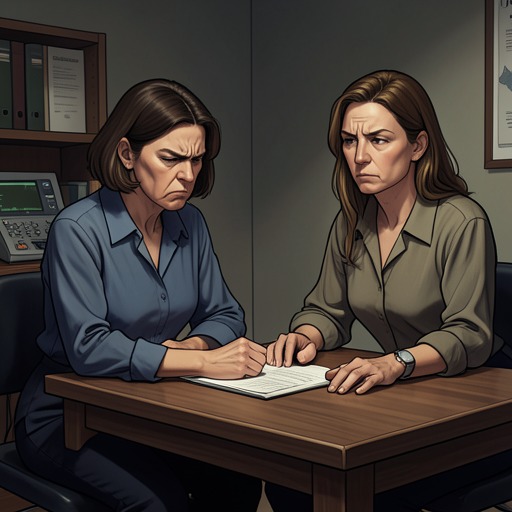
Ten years later, Nadia returned to the town and became Zara’s psychologist. During one session, Zara considered telling her the truth about why she had come and had the letter with her, but did not show it. Their conversation instead turned to a picture in Nadia’s office: a woman looking toward the horizon. When Nadia asked what Zara thought about it, Zara remarked that it would not be her choice of picture. The exchange left Nadia considering an interpretation no one else had offered: that the woman in the painting might be thinking of ending her life. Nadia had painted the figure on a bridge, but had not recognized that as the image’s most consequential detail.
The effect ran in both directions. Nadia’s response to Zara continued beyond the session; she had trouble sleeping and, at their next meeting, had removed a photograph of her mother from her desk. Zara, meanwhile, continued to withhold the letter and the history that might explain her presence in Nadia’s consulting room. Their sessions could also contain humor: an awkward exchange about Nadia’s bill made them both laugh. Such moments do not dissolve the silence between them, but they show a relationship with room for ordinary warmth as well as unspoken distress.
Disclosure and recognition
Zara eventually lets the envelope slip from her hand, and Nadia picks it up. Zara wants to explain that the letter was why she first came to see Nadia, exactly ten years after the Man on the bridge died; that she needs someone to read it aloud and help her remain safe afterward; and that she witnessed Jack rescue Nadia. But she cannot get beyond Nadia’s name and a few broken words. The disclosure arrives first as an action, not as a complete account: Nadia opens the envelope and draws out the handwritten four-word letter Zara has kept for a decade.
Nadia is left unsure where to begin. She has spent ten years wondering who the Man on the bridge was, while Zara has spent the same decade watching Nadia from afar. The asymmetry finally gives way: Nadia can see that the patient before her has a history in which Nadia herself is present, even though she had never known it. The letter’s message, It wasn’t your fault, answers the guilt at the center of Zara’s attachment to it, while the act of opening it makes that private history available to another person.
Shared work beyond the consulting room
Nadia’s professional life also extends beyond individual sessions. She attends an annual summer camp for children who have lost a family member to suicide, where the work is to listen, speak when useful, and make room for laughter. A photograph of Nadia with the children, all wearing matching shirts for the organization funding the camp, is on a bookcase in her office. The camp reflects the support Zara had been unable to give herself during years of watching and wondering: people bereaved by suicide need not carry guilt, shame, and silence alone.
After the disclosure, the narrative places this work beside a donation that will allow the camps to continue for years. The donor is described as a woman with headphones who has left her job, given away her fortune, and crossed a bridge. The juxtaposition links Zara’s long-held secret to a wider form of support without turning Nadia into the sole answer to it. Their relationship begins in concealed observation and professional care; its significance lies in the moment that one woman’s unspoken history becomes something the other can finally witness, within a community built to help people live with loss.